Learning How to Learn
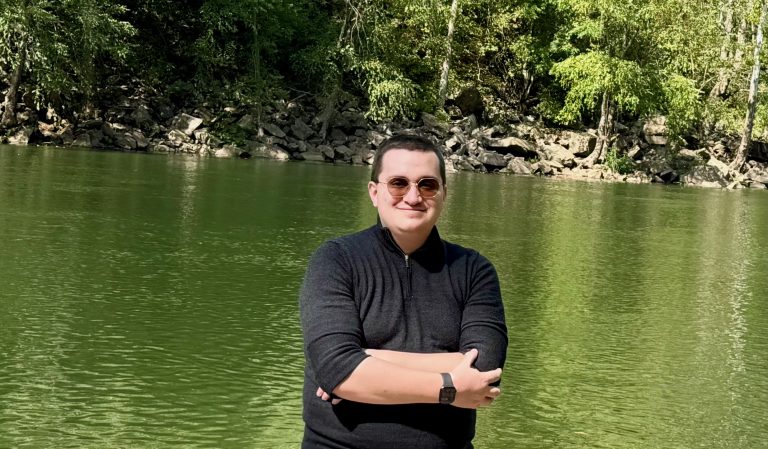
I have been bringing you stories of current applicants of the Amish Descendant Scholarship Fund who have persevered to find their path to college or university. Today I bring you the remarkable story of Michael Walker, who grew up among the Swartzentruber Amish (the strictest of the strict) and became a software engineer. It is amazing that Michael has such an aptitude for technology, considering he comes from a culture where modern technology was forbidden. Here is his story in his Michael’s own words.
Learning How To Learn
By Michael Walker
I am Michael Walker, but some of you might have known me as Peter Troyer since I changed my name a month or two before I started college. There was no particular reason for me to change my name other than the fact that I am not very sentimental and I made up my mind one day that it would be practical to change my name, and I went ahead with it.
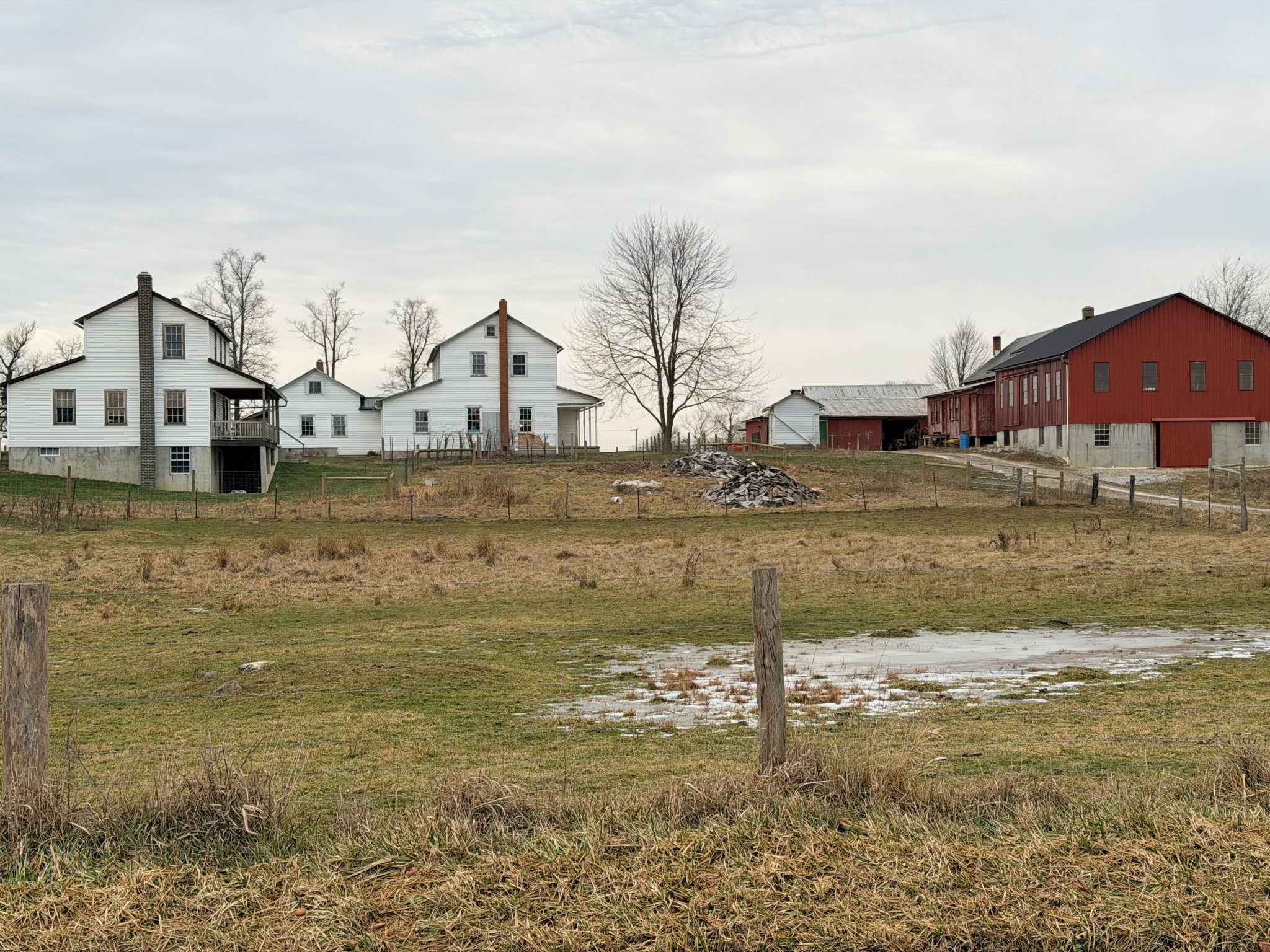
I grew up in a traditional Swartzentruber Amish family in Wayne County, Ohio. I have five siblings, three brothers and two sisters, which is not large for an Amish family by any means. I am the second youngest in the family, with the oldest sibling being a sister that is almost five years older than me. Like many Swartzentruber Amish families, we lived a simple life, farming our own food and helping out family members until we were old enough to start our own trades. My brothers and I mostly worked as woodworkers. My mom passed away from cancer when I was 11, so my oldest sister who was only 15 at the time stayed at home to take care of the rest of us and the house. Eventually, my younger sister also started helping out more as she grew older. However, because of mom’s death, neither of them got much of a chance to work away from home.
I left the Amish pretty soon after I turned 18, not too concerned about the daunting uncertainty I would face. I was into technology, which was one of the major reasons I decided to leave. Even though it was nearly seven years earlier, the death of my mom was another deciding factor on why I ended up leaving the Amish. I always had a special bond with my mom, and would not have wanted to disappoint her by leaving. But after she died, it became the opposite and I could not wait to be able to leave. Furthermore, I did not feel like I fit in or that Amish folks understood me since I generally do things from a practical standpoint, whereas many Amish will do things because it is required or because it has always been done a certain way.
When I left, I began working at a factory making bedroom furniture., then on a flooring mill run by another former Amish individual. I did not have what it took to do the detailed work, nor did I find joy in doing something that did not require much thinking. Even though I did not find it fulfilling, it kept me going until I figured out what I wanted to do with my life.
Soon after I left, Aaron Swartzentruber, who had left a decade or so earlier and had helped me get settled into my new life, started GED classes and asked me if I would like to join him. I decided to attend, but I had to drop out after a few classes because I was just trying to keep my head above water. I was struggling to do my job and classes at the same time. I restarted attending classes a few times over the next two years, but I never stayed long enough to take any of the tests. There was not a single reason why I quit each time, but I moved apartments five times and changed my job one time within the first three years after I left, so it was a combination of those shifts while trying to find stable footing.
Finally, about three years after I left, I managed to get through all four subjects and the required tests starting in late November, completing the last test in early April. At that time, I was not planning to attend college because I did not think I was very intelligent because of my experiences in Amish grade school. However, I discovered during GED classes that the subjects are taught very differently in non-Amish schools and that I quite enjoyed the topics.
Before I took the last GED test, I had started looking into what I would need to do to attend college. At first, I was only planning to get an Associate’s degree for financial reasons, but as I started planning and doing more research, I decided to get a Bachelor’s degree as well. I found out that the biggest hurdle was going to be money, which was not at all surprising to me since I accepted by this point that it was going to be expensive. I did not try to tackle everything at once. Instead, I concentrated on finding ways to make college affordable while still getting a lot of value from attending. I learned that many students attend community college for two years and then transfer to a four-year in-state college for the last two years. This came up as an option around the time when I decided to get a Bachelor’s degree, which is what I decided to do.
I found myself navigating college amidst individuals who I felt possessed a superior knowledge of the expectations or had better support channels. It felt a bit like leaving the Amish community for the first time — full of excitement and the daunting uncertainty of what was in store for me. Then I started wondering, what had I really signed up for? Many who have left the Amish and attended college might have felt the same way. By this point, the financial hurdle of attending college did not seem as big as it once was, and instead my focus shifted to my academic interests and career aspirations.
I would describe the first year of college as challenging and similar to the first year after leaving the Amish community. In that first year, I was thinking about whether to do a finance degree (which I was leaning towards heavily) or a business degree. By the end of the year, I realized I would be happier and do better in computer science. Given my strong affinity for technology, it is intriguing to ponder why it was not my first choice for a major, but I wondered whether I would be able to acquire sufficient knowledge needed to get a job in tech. It was only after taking an entry-level psychology class during my first year that I started to realize why I had not enjoyed Amish grade school more. The Amish way of teaching focused on teaching repetition, which I found boring since there was nothing to learn after the topic was first introduced.
During my first semester, I enrolled in twelve credit hours and worked full-time to cover tuition. I submitted the FAFSA and obtained a dependency override, but none of my scholarship applications resulted in any financial assistance. By the time I learned of the Amish Descendant Scholarship Fund (ADSF), it was too late to apply for the first year. My expenses were lower than before, but I worked fewer hours and lived in a more expensive area in Columbus. Since I spent most of my free time studying instead of socializing, it helped to reduce my expenses. Fortunately, by my second year, I had learned about ADSF and received a scholarship that year and each year after that. The scholarship provided significant financial support and allowed me to take on a larger course load and take summer classes, which I would otherwise not have been able to do.
After earning my Associate of Science degree from Columbus State Community College, I transferred to Ohio State University to pursue a degree in Software Engineering with a minor in Business. To save money and graduate faster, I worked eighteen to twenty hours per semester while taking eighteen or more credit hours. The curriculum also became more challenging and specialized in the latter two years of the program, although the workloads became easier for those who kept up. Each major required practical experience, and ours involved designing and building a functional mobile app in a team of four to five students. By this point, most of us had experience developing and implementing functional apps and writing low-level software.
After my graduation, which happened during the pandemic, I was lucky to quickly secure work as a software developer at a cybersecurity start-up. Six months later, I began working with several recruiters to find a position that was closely related to my interests in technology and finance. About two months later, they helped me land an entry-level position with JPMorganChase, where I currently work as a senior associate in software engineering. I was lucky that I joined while they were doing a major system redesign, which happens every decade or two. As a result, this has allowed me the opportunity to lead multiple projects that contributed to the development of the new system. Notably, I am one of less than a handful of folks who worked on developing the new system that encrypts and translates the PIN block when you insert or tap your card at a terminal, which is required by the payment card industry. It feels surreal, and I feel very accomplished to have gone from an Amish farm boy to working on a critical software system that is used by millions of people each day. It is still hard to believe sometimes when I look back at all that I have done and then remember the fact that I used to live in a house without electricity and travel by horse and buggy. It is also important to me to feel grounded, so I always look at the opposite side of that and I realize there is still so much more I can achieve.
To get from where I grew up to where I am now, I believe the most effective strategy I used was to address obstacles one at a time rather than attempting to overcome every challenge before commencing. Initially, it may appear that the sole focus is on obstacles, but with time, the process becomes more manageable. Furthermore, each accomplishment serves as a motivation for tackling the subsequent obstacle. While setbacks are inevitable, it is crucial to learn from them and avoid repeating the same mistakes. Learning is a highly rewarding experience, and the Amish Descendant Scholarship Fund had a large part in making the learning experience more rewarding by reducing stress and making it possible to pay for courses.
I would like to advise prospective students that it is important to engage with subjects that genuinely interest you and do not feel like you need everything figured out before you start college. Furthermore, the concept of “learning how to learn” has consistently resonated with me and remains a guiding principle for me. I value it as much as any of the courses I took in college. It transcends age and language barriers, enabling individuals of all backgrounds to apply this principle and reap its benefits.
How an Amish Boy Became a Physicist, Part 2
Photo by Leon Hostetler of his childhood home Leaving the Amish By Leon Hostetler…

How an Amish Boy Became a Physicist, Part 1
Today I bring you the amazing story of Leon Hostetler’s educational journey that took him…
Learning How to Learn
I have been bringing you stories of current applicants of the Amish Descendant Scholarship Fund…
To order a signed copy of my book(s), click on an image below. You will be taken to the books page of my author website to purchase.




wow. That’s amazing! Great you got help with all the financial burdens.
Wish you God’s blessing!
What an amazing story! Life is truly a step-by-step process, a discovery and learning process.
And JP MorganChase, right out of college! I wish you all the best as you continue with your work.
This is what learning skills and work experiences is all about. What a great accomplishment!
Amazing journey, and great advice!
Great story! Indeed–one step at a time with patience..
I wonder how he navigated his social relationships and family connections during this time–or are those aspects not important ?
Perhaps it will take time to sort through some of those things.